

Research by the Somerset and Dorset Postal History Society shows that in 1835 Burnham’s post town was Bridgwater, so presumably all mail had to be taken there to be processed. By 1844, four years after the introduction of of the uniform penny post and the first postage stamp, Burnham had become a Sub-office of Bridgwater with an undated ‘Burnham Somerset’ double arc handstamp in use from 1842-49 ( date stamping was still done at Bridgwater).
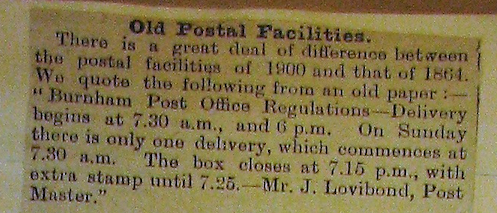
The first detailed information we have found is a retrospective press clipping of a service run by Mr J. Lovibond in the 1860’s:
Another passing reference, by the Bridgwater Mercury of 1858, to Jane Tully’s shop being next door to the Post Office, suggests it may have been in Victoria St but it is not clear exactly where.
It is believed from anecdote (Sam Nash’s notes) that Joseph Salisbury, a local stationer, may have run a post office during the mid 19th century. It is also thought that his house was Ivy Lodge / Villa, a large building in Victoria St on the site later occupied for many decades by Tucker’s Garage and now occupied by apartments. Whether this has any relationship to the Mercury reference is not known.
In 1875 Burnham P.O. was issued with a code number 581 which would have been used on a barred ‘obliterator’ hand stamp in addition to the date stamp to cancel the postage stamp (these obliterators replaced the original Maltese Cross design. They continued in use until 1889. ‘Squared Circle’ stamps were in use between 1889 and 1905.

By 1887 Burnham P.O. was classified as Railway Sub-Office (R.S.O. circular date stamp) – permitted to exchange mail directly with a railway Travelling Post Office (presumably running from Burnham or Highbridge station). A squared circle hand stamp was also being used early in the 1900s.
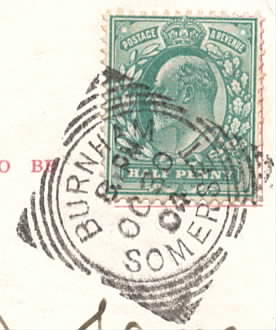
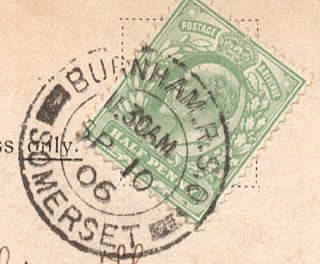
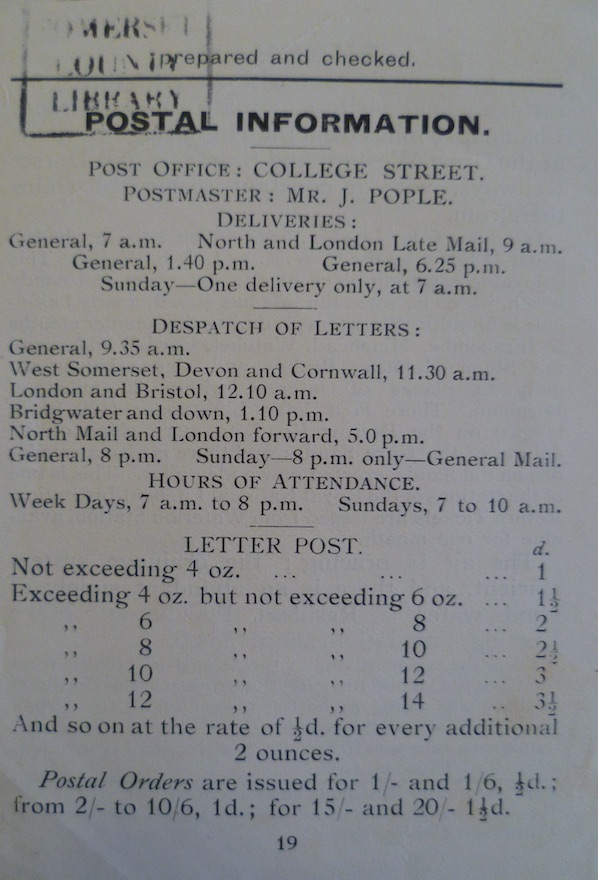
We know that by the late 1890’s there was an office at 25 College St run by Mr J. Pople:
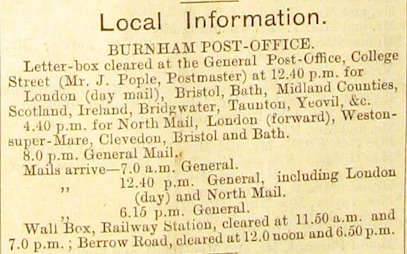
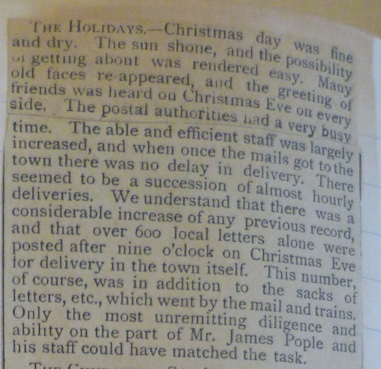
1902 – Local press report:
In 1904 Mr Pople resigned from the Post Office and by 1911 it had moved next door to No 23 and was run by Mr Rundle. The local press report said that his “long, faithful, conscientious and painstaking services have been greatly appreciated ” and went on to have a slight dig at the P.O: ” It is a regrettable circumstance, and the inhabitants of Burnham will learn with surprise, that notwithstanding his length of service, from the conditions of his appointment and his not being what is termed an ‘established’ officer, Mr Pople is not entitled to a retiring allowance”
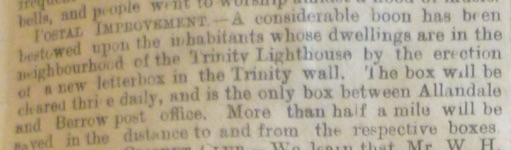
In 1904 also there was another development:
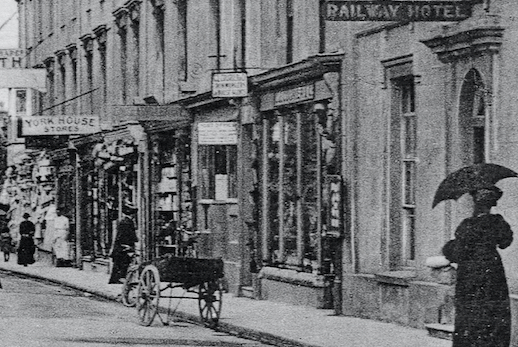
No 25 College St became Pople’s Stationers and Lending Library. In the picture below Rundle’s P.O. can be seen behind the barrow, with the Stationers to its left. The rectangles seen in the lower shop front could be a business window (left) as was common with early P.O.s, and a posting box (right). By the late 1920’s the premises had become an Ironmonger’s (Hardware) shop.
In 1905 Burnham was classified as a Sub-office / Post Town but R.S.O. stamps continued in use.
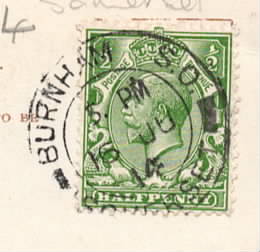
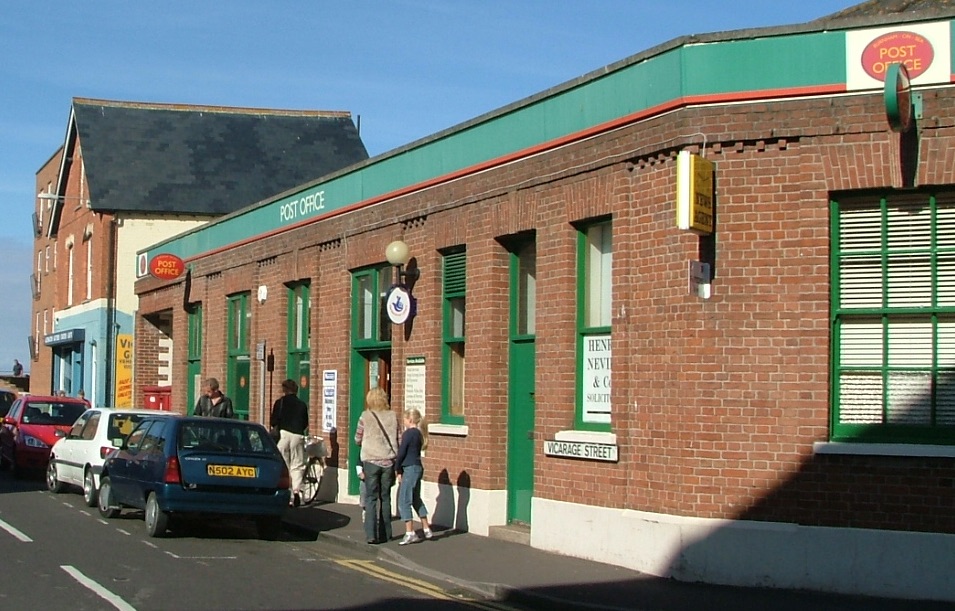
By the time of WWI there was an office functioning on the Oxford St / Abingdon St corner in Clifford House (centre, below). This was classified as a Town Sub-office. By the 1970’s the office (now a sub – P.O.) had moved into the premises seen at the left hand end of the row in the photo . Many will still remember this office though it has been closed since 2003.
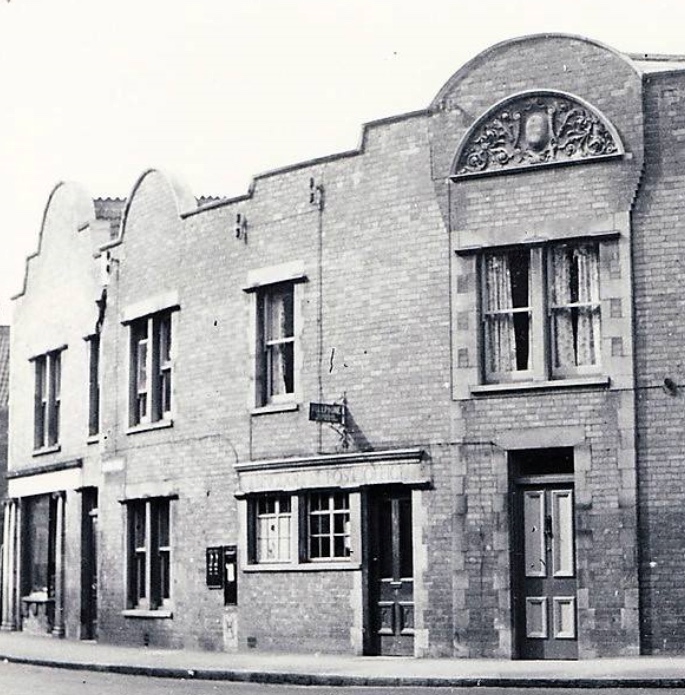 In 1917 Burnham became Burnham on Sea – new circular date stamps were provided showing the change of name.
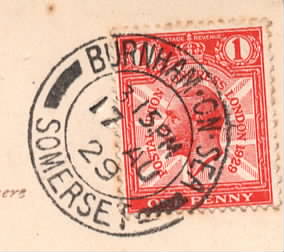
From 1932 to 2003 Chestnut Terrace P.O. (Berrow Rd) was also functioning as Town Sub-Office for Burnham.
From 1935 to1980 – Burnham Rd P.O. was functioning as Town Sub-Office for Highbridge.
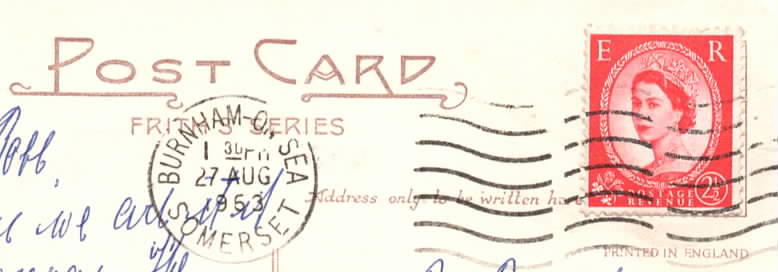
At some point the double ring handstamp was replace day a single ring machine canceller (above from 1963).
The Post Office we now know took over as the main P.O., though originally in single storey form. If you know exactly when this was first built and when it was converted to two storeys please comment below.
The picture at the top of the page is of a postage stamp of 1984 showing a nocturnal attack on the Exeter Mail Coach near Salisbury by a lioness escaped from Ballard’s Touring Menagerie. The passengers fled into the Inn whilst the lioness killed both the lead horse and a mastiff before being recovered by its owner. The mail was of course delayed…….by 45 minutes! A full account can be found at www.geriwalton.com/the-lioness-and-exeter-mai/
On September 13th 1961 I posted a postcard in Putney in London that was picked up and stamped at 5.13 p.m. It was delivered in Burnham the following morning.